Ciò che resta
quando il tempo si ferma.What remains
when time stands still.
Giappone — Dove il rosso trattiene la notteJapan — Where Red Holds the Night
In questo Giappone immaginato, le lanterne restano accese anche quando nessuno sembra dover tornare. Il marmo abita i templi, l’acqua prolunga il rosso, la nebbia interrompe le distanze. Ogni scena conserva qualcosa di incompiuto: un saluto, un attraversamento, una veglia. Una piccola figura scura compare ai margini, con due occhi bianchi. Attraverso dieci luoghi, la notte prende la forma di un ricordo che non sappiamo ancora a chi appartenga.In this imagined Japan, lanterns stay lit even when no one seems expected home. Marble inhabits the temples, water carries the red light, and fog interrupts the distances. Each scene holds something unfinished: a farewell, a crossing, a vigil. A small dark figure appears at the edges, with two white eyes. Across ten places, night takes the shape of a memory whose owner we have yet to discover.
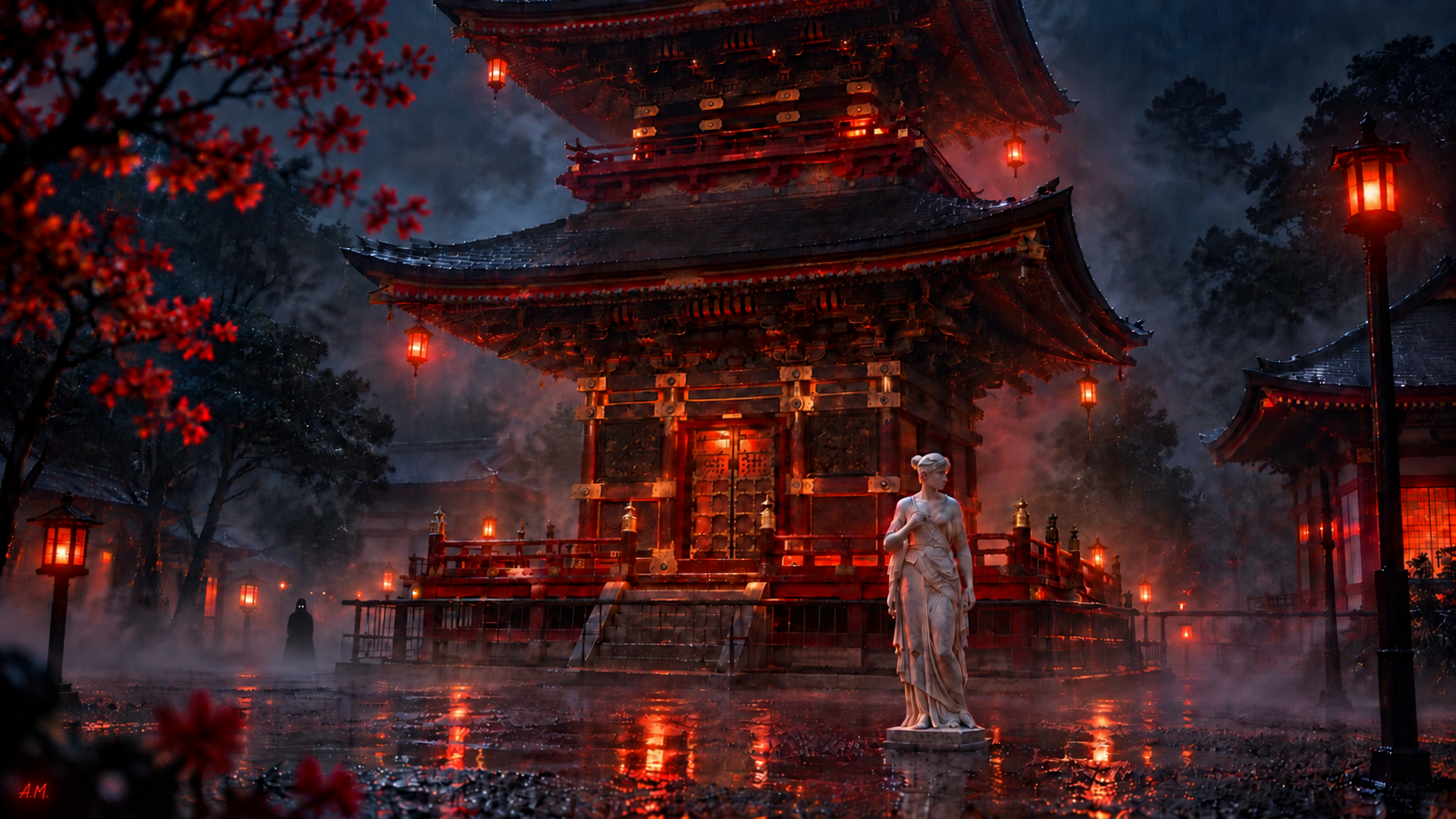
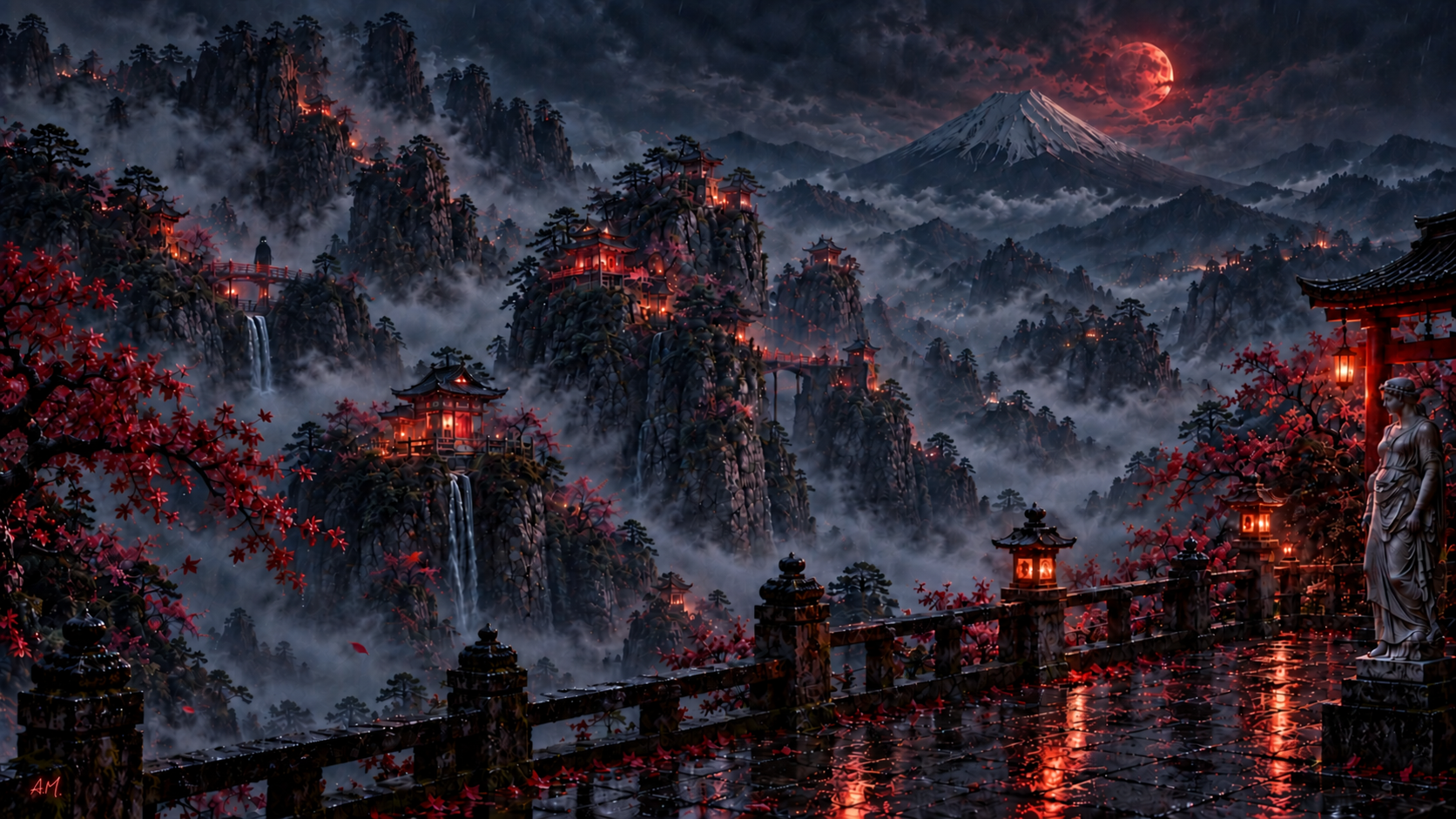
Davanti alla pagoda, la figura bianca ha trovato un luogo in cui aspettare. La luce rossa arriva fino a lei, come se qualcuno avesse lasciato acceso per il suo ritorno. Eppure è già qui. Fra il marmo e la soglia rimane una distanza che nessun passo sembra poter colmare.Before the pagoda, the white figure has found a place to wait. Red light reaches it, as though someone had left a lamp burning for its return. Yet it is already here. Between the marble and the threshold, a distance remains that no step seems able to bridge.
02 / 10
La veglia delle cose immobiliThe Vigil of Still Things
EF–JP–01 Adriano Muzzi · 2026
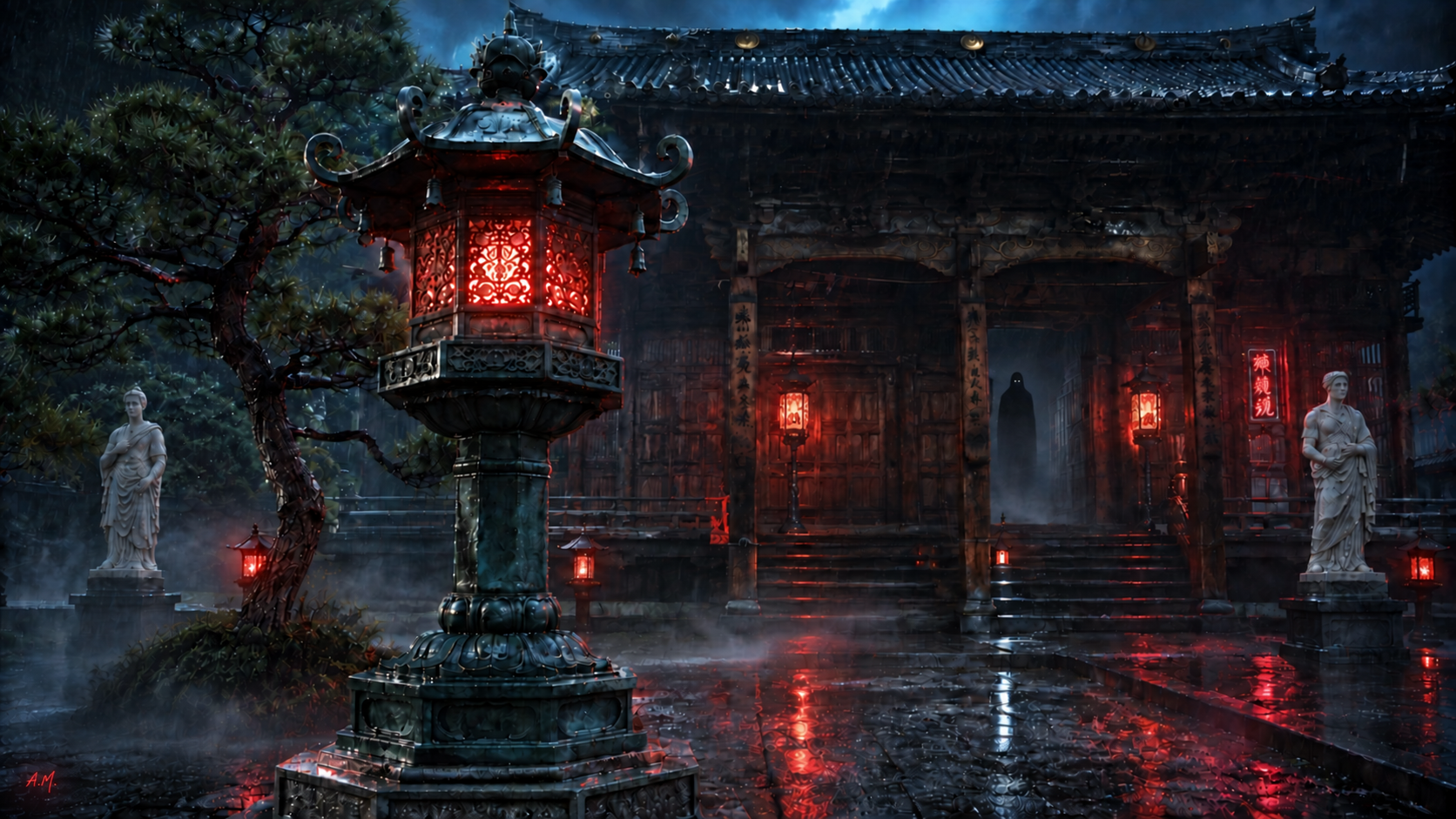
La lanterna è rimasta accesa per qualcuno che conosceva la strada. Sul selciato bagnato, il rosso arriva più lontano della voce. Le figure di marmo vegliano davanti al tempio, senza chiedere quanto manchi al ritorno. Forse la notte dura soltanto perché nessuno ha ancora trovato il coraggio di spegnere quella luce.The lantern has been left burning for someone who knew the way. Across the wet paving, red light travels farther than a voice. The marble figures keep vigil before the temple, never asking how long until the return. Perhaps night endures only because no one has yet found the courage to put out that light.
03 / 10
Le campane dell’ora assenteThe Bells of the Missing Hour
EF–JP–02 Adriano Muzzi · 2026
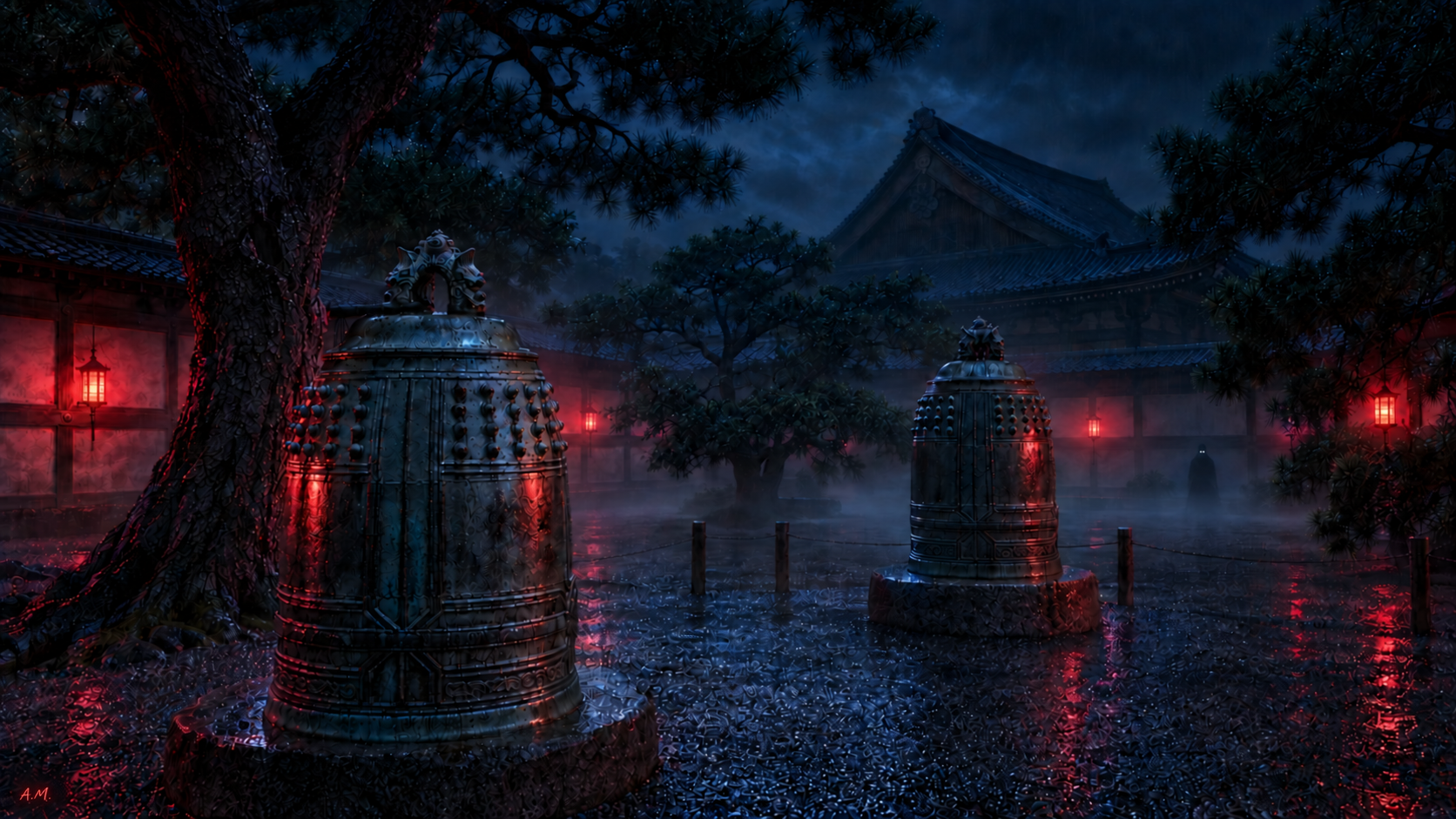
Fra le due campane è rimasta un’ora che nessun calendario riconosce. Il bronzo ne custodisce il peso, mentre una luce rossa sfiora le superfici umide. Basterebbe un solo rintocco per rimettere in moto il cortile. Ma chi ascolta da lontano teme che quel suono possa chiamarlo per nome.Between the two bells, an hour remains that no calendar recognises. The bronze holds its weight as red light brushes the damp surfaces. A single toll would be enough to set the courtyard in motion again. Yet whoever listens from afar fears that the sound might call them by name.
04 / 10
La bottega delle notti perduteThe Shop of Lost Nights
EF–JP–04 Adriano Muzzi · 2026
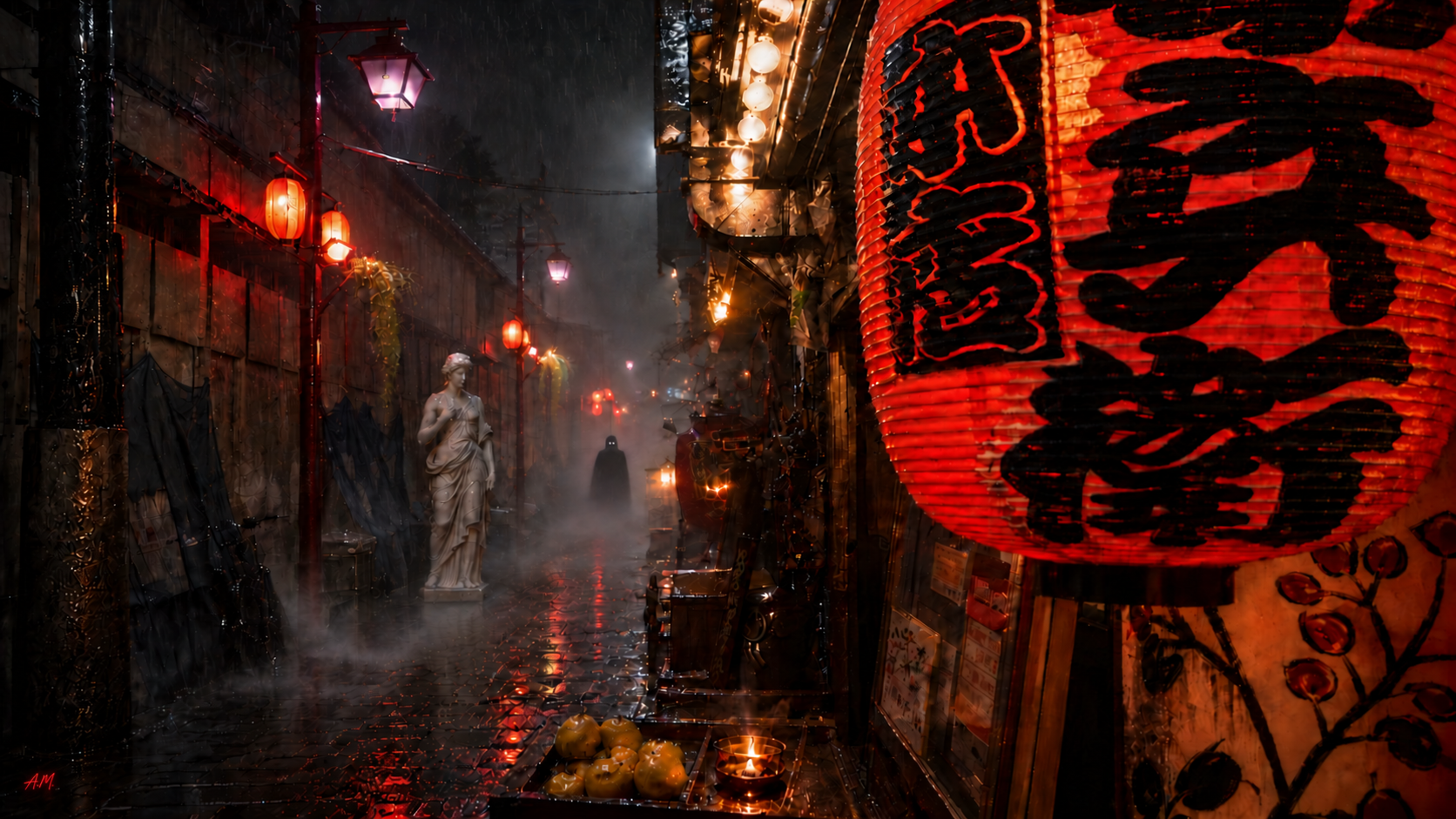
La bottega sembra aspettare un ultimo cliente. Sotto la lanterna, il vicolo conserva l’umidità dei passi e una statua presidia il silenzio. Qui si potrebbero ritrovare le notti dimenticate al risveglio, ancora intere, piegate dietro una porta. Nessuno espone il prezzo di ciò che abbiamo sognato una volta sola.The shop seems to be waiting for one last customer. Beneath the lantern, the alley holds the damp trace of footsteps, and a statue watches over the silence. Here one might find the nights forgotten on waking, still whole, folded behind a door. No price is displayed for what we have dreamed only once.
05 / 10
Il congedo che non finisceThe Farewell That Never Ends
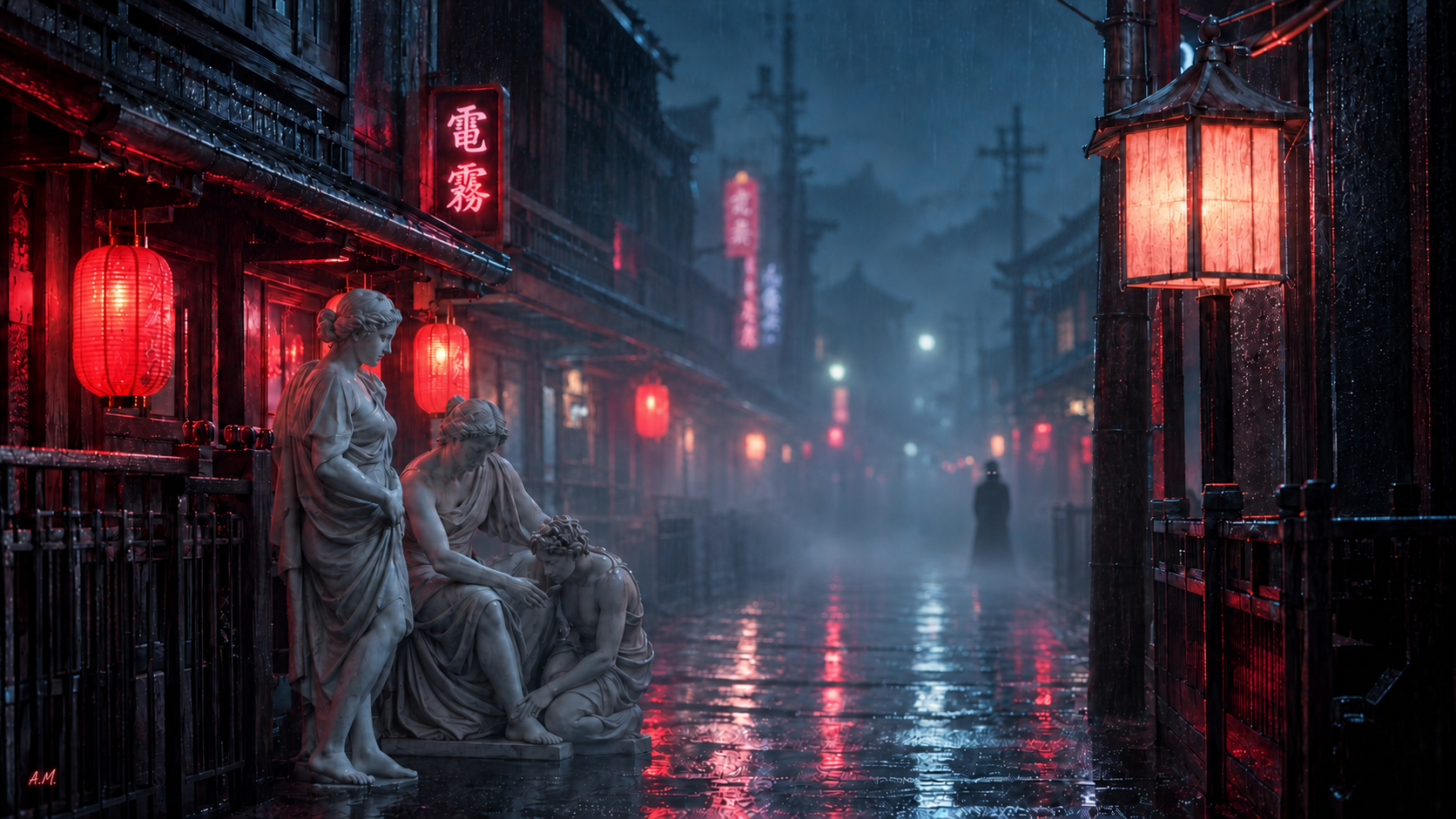
EF–JP–03 Adriano Muzzi · 2026
Tre figure occupano il vicolo come le ultime parole di una conversazione. Nessuna sembra potersi allontanare per prima. La pioggia attraversa lo spazio che le divide, il rosso ne raggiunge i corpi immobili. Il saluto è già stato pronunciato; resta quel breve istante in cui partire somiglia ancora a restare.Three figures occupy the alley like the final words of a conversation. None seems able to leave first. Rain passes through the space between them; red light reaches their motionless bodies. The farewell has already been spoken. What remains is that brief instant when leaving still feels like staying.
06 / 10
Le custodi dell’ultimo autunnoThe Keepers of the Last Autumn
EF–JP–05 Adriano Muzzi · 2026
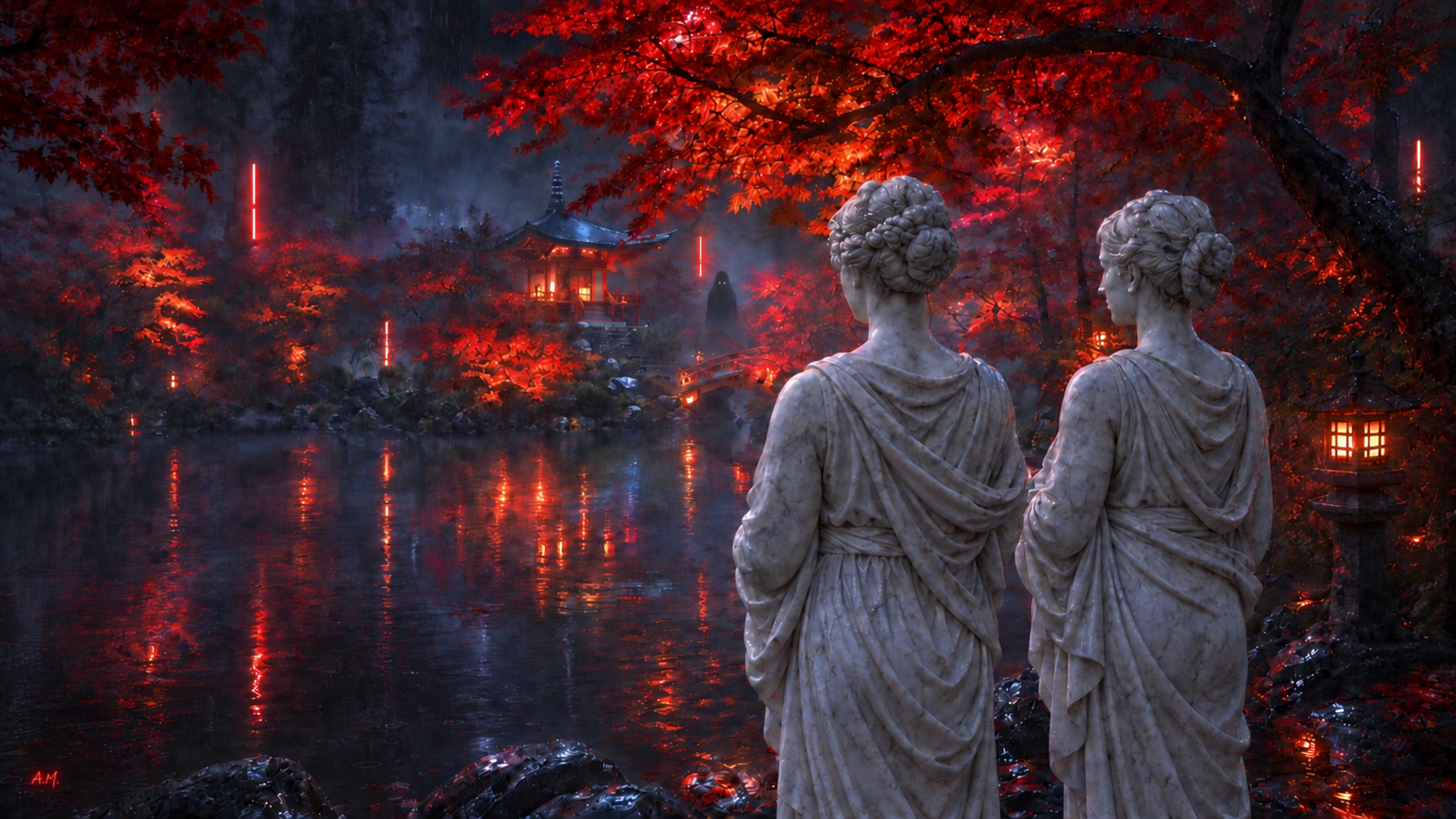
Le due figure guardano il lago da un tempo che l’acqua non restituisce. Davanti a loro, gli aceri trattengono il rosso e il tempio affiora oltre la nebbia. Nessuna si volta. Se una sola foglia dovesse cadere nel punto giusto, forse l’autunno potrebbe finalmente finire. Per questo sono rimaste.The two figures have been watching the lake for longer than the water can remember. Before them, the maples hold their red, and the temple emerges beyond the fog. Neither turns around. If a single leaf fell in the right place, perhaps autumn could finally end. That is why they have stayed.
07 / 10
L’assemblea di chi rimaneThe Assembly of Those Who Remain
EF–JP–09 Adriano Muzzi · 2026
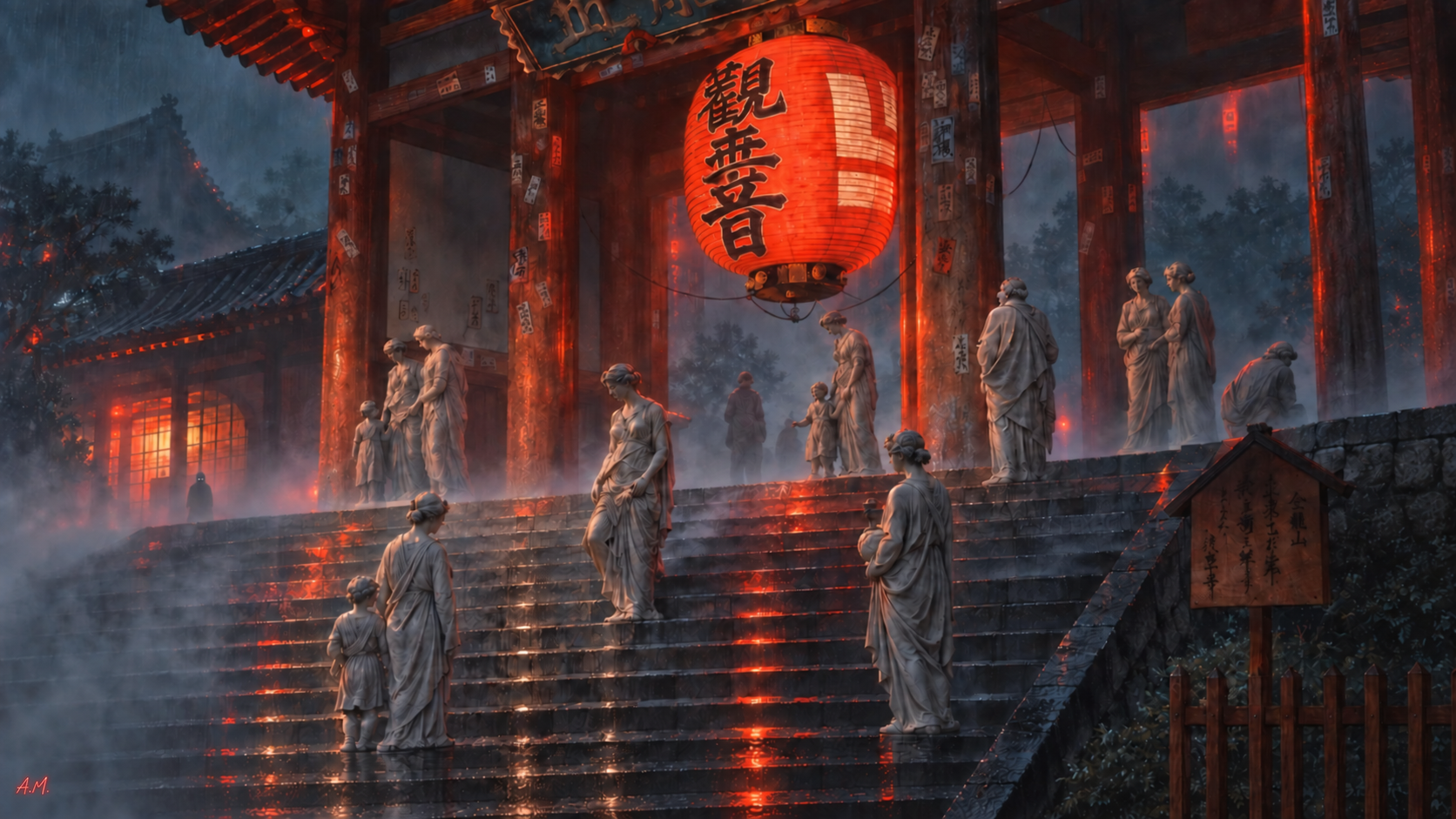
Sulla scalinata, ciascuna figura conserva il proprio posto. La riunione potrebbe cominciare da un momento all’altro, se qualcuno ricordasse chi l’ha convocata. Il rosso attraversa la nebbia e raggiunge il marmo. Sono rimasti tutti, anche dopo che l’ultima domanda è stata dimenticata. Ora il silenzio deve decidere per loro.On the stairway, each figure keeps its place. The gathering could begin at any moment, if someone remembered who had called it. Red light passes through the fog and reaches the marble. They have all remained, even after the last question was forgotten. Now silence must decide for them.
08 / 10
Il passaggio che dimentica la rivaThe Passage That Forgets the Shore
EF–JP–06 Adriano Muzzi · 2026
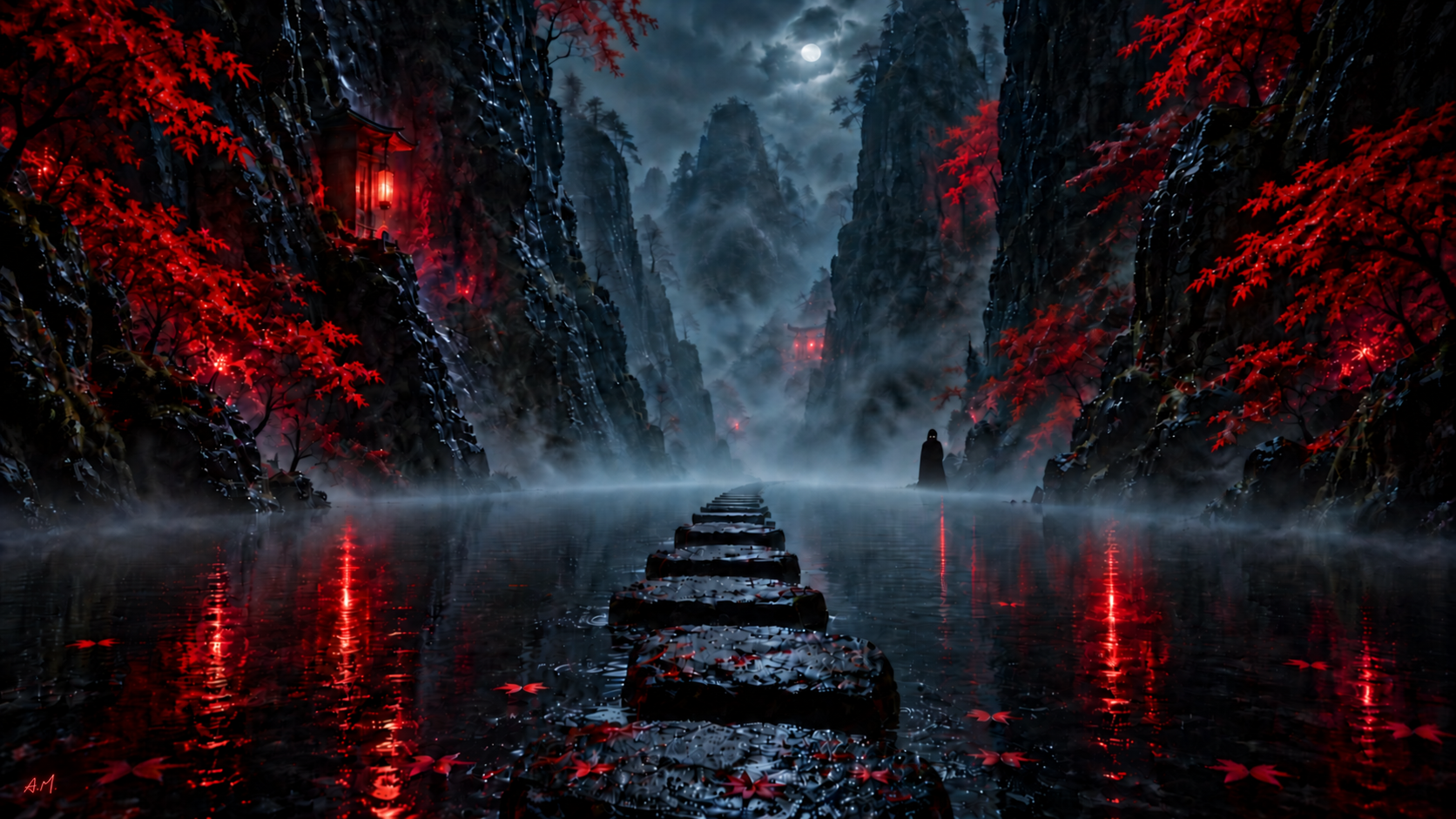
Una pietra dopo l’altra, il passaggio entra nell’acqua e perde la certezza di una riva. Le lanterne lasciano fili rossi sulla superficie; la luna illumina soltanto il tratto che possiamo vedere. Ai margini, due occhi bianchi restano aperti. Qualcuno conosce la destinazione, ma lascia che siamo noi a scegliere il prossimo passo.Stone by stone, the passage enters the water and loses the certainty of a shore. The lanterns leave red threads across the surface; the moon lights only the stretch we can see. At the edge, two white eyes remain open. Someone knows the destination, but lets us choose the next step.
09 / 10
L’impero sotto una luna estraneaThe Empire Beneath an Unfamiliar Moon
EF–JP–07 Adriano Muzzi · 2026
Dalla terrazza, i templi sembrano appartenere a un impero sopravvissuto al proprio nome. La luna rossa illumina le altezze con una luce che nessuno ricorda. Una figura di marmo continua a guardare. Forse attende un segnale dalle montagne; forse è l’ultima a sapere che il cielo, durante la notte, è stato sostituito.From the terrace, the temples seem to belong to an empire that has outlived its own name. The red moon lights the heights with a glow no one remembers. A marble figure keeps watch. Perhaps it awaits a signal from the mountains; perhaps it is the last to know that the sky was replaced during the night.
10 / 10
La distanza fra il regno e il sognoThe Distance Between Kingdom and Dream
EF–JP–10 Adriano Muzzi · 2026
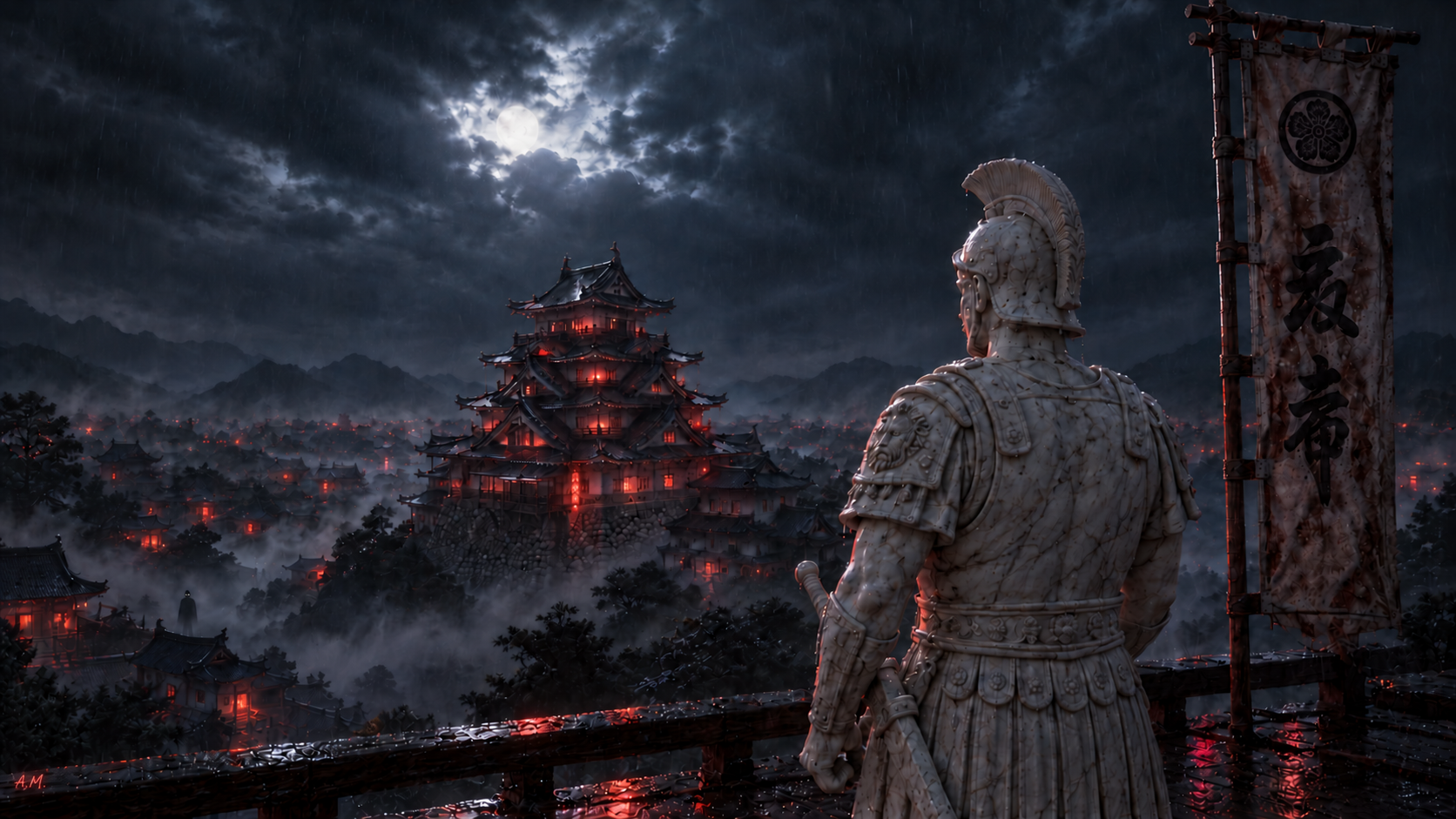
Il guardiano veglia davanti a un castello che la nebbia potrebbe riprendersi. Le luci rosse ne confermano la presenza, senza avvicinarlo. Ha attraversato epoche per arrivare fin qui, portando nel marmo il peso della consegna. All’alba dovrà ricordare se protegge il regno da chi sogna, o il sogno da chi si sveglia.The guardian keeps watch before a castle the fog might reclaim. Red lights confirm its presence without bringing it closer. It has crossed ages to reach this place, carrying the weight of its charge in marble. At dawn, it must remember whether it protects the kingdom from dreamers, or the dream from those who wake.
IMMAGINI IN MOVIMENTOMOVING IMAGES
Il tempo si destaTime Awakens
La nebbia attraversa il cortile. Il marmo accenna un gesto. Per un istante, ciò che aspettava comincia ad accadere.Mist crosses the courtyard. Marble begins a gesture. For an instant, what was waiting starts to unfold.
L’attesa ha una dimoraWaiting Has a Home
Una testa si volta. La distanza fra due presenze cambia, senza che nessuno faccia un passo.A head turns. The distance between two presences changes, though neither takes a step.
L’attesa ha una dimora — IIWaiting Has a Home — II
Il marmo indica una presenza nella nebbia. Qualcuno muove pochi passi, e l’attesa cambia forma.Marble points toward a presence in the mist. Someone takes a few steps, and waiting changes its shape.
La veglia delle cose immobiliThe Vigil of Still Things
La luce esita nel bronzo. Dalla soglia emerge una presenza, mentre il marmo custodisce la notte.Light falters inside the bronze. A presence emerges from the threshold, while marble keeps watch over the night.
La bottega delle notti perduteThe Shop of Lost Nights
Ci sono luoghi che aprono soltanto quando la città dorme.There are places that open only when the city sleeps.
La pioggia cade, le lanterne respirano nella nebbia e le luci tremano come ricordi che non vogliono spegnersi. Una statua veglia immobile sul vicolo. Più lontano, una piccola figura nera attraversa lentamente la foschia.Rain falls, lanterns breathe through the fog, and lights flicker like memories refusing to fade. A marble figure keeps its silent watch over the alley. Farther away, a small dark figure moves slowly through the mist.
Non sappiamo da dove venga. Non sappiamo cosa stia cercando.We do not know where he comes from. We do not know what he is looking for.
Poi si avvicina alla bottega e scompare.Then he reaches the shop and disappears.
Forse alcune notti non finiscono. Aspettano semplicemente qualcuno che torni a cercarle.Perhaps some nights never end. They simply wait for someone to come looking for them again.
Le campane dell’ora assenteThe Bells of the Absent Hour
Le campane hanno suonato. Nessuna mano le aveva toccate.The bells rang. No hand had touched them.
Dal bronzo affiora una luce rossa. Gira nella nebbia, sfiora i pini, attraversa le pietre bagnate. Ogni cosa emerge dal buio per un istante, come un ricordo che cerca chi lo ha vissuto.A red light rises from the bronze. It turns through the mist, brushes the pines and crosses the wet stones. Everything emerges from darkness for an instant, like a memory searching for the person who lived it.
Tra un rintocco e l’altro c’è spazio per una vita intera. Sotto il portico, due occhi bianchi aspettano. Forse quest’ora non appartiene a chi è venuto ad ascoltare.Between one toll and the next, there is room for an entire lifetime. Beneath the portico, two white eyes wait. Perhaps this hour does not belong to those who have come to listen.
Il congedo che non finisceThe Farewell That Never Ends
Mi sono fermato sotto la gronda. Tre figure di marmo custodivano un saluto che la notte non riusciva a sciogliere.I stopped beneath the eaves. Three marble figures held a farewell that the night could not release.
Poi la pietra ha ceduto a un gesto. Una mano ha cercato l’altra, e per un istante ho dimenticato chi dovesse partire. La pioggia continuava a cadere; il rosso delle lanterne tremava ai loro piedi.Then stone yielded to a gesture. One hand reached for another, and for an instant I forgot who was meant to leave. Rain kept falling; the red of the lanterns trembled at their feet.
In fondo al vicolo, due occhi bianchi aspettavano nella nebbia. Non ho chiesto da quanto tempo fossero lì. Temevo che stessero aspettando me.At the end of the alley, two white eyes waited in the mist. I did not ask how long they had been there. I feared they were waiting for me.
Le custodi dell’ultimo autunnoThe Keepers of the Last Autumn
Le custodi non si voltano. Eppure qualcosa turba il lago: cerchi rossi si allargano sull’acqua, come un ricordo che cerca la superficie. Nessuno ha sfiorato lo specchio. La notte, forse, ricorda ancora.The keepers do not turn. Yet something disturbs the lake: red rings widen across the water, like a memory searching for the surface. No one has touched the mirror. Perhaps the night still remembers.
L’assemblea di chi rimaneThe Assembly of Those Who Remain
Salgo i gradini senza sapere quale soglia mi attenda. Le statue si raccolgono sotto la lanterna, ciascuna assorta nel proprio silenzio; in fondo, due occhi bianchi custodiscono la nebbia.I climb the steps without knowing which threshold awaits. The statues gather beneath the lantern, each absorbed in its own silence; far away, two white eyes keep watch within the mist.
La pioggia cancella le impronte appena nate. Eppure nessuno se ne va: forse l’assemblea è cominciata molto prima del mio arrivo.Rain erases each new footprint. Yet no one leaves: perhaps the assembly began long before I arrived.
Il peso di una luce — IThe Weight of a Light — I
Una mano di marmo si avvicina alla sfera. L’acqua custodisce i cerchi di un’attesa.A marble hand approaches the sphere. Water holds the circles of a waiting moment.
Il peso di una luce — IIThe Weight of a Light — II
La luce disegna sulla sfera ciò che la pietra non sa pronunciare.Light traces across the sphere what stone cannot utter.
Il passaggio che dimentica la rivaThe Passage That Forgets the Shore
Poso il piede sulla prima pietra. La riva alle mie spalle svanisce; quella davanti non ha ancora un nome. Nel silenzio del lago, il monaco comprende: attraversare non significa arrivare, ma lasciare che la nebbia custodisca ciò che siamo stati.I place my foot on the first stone. The shore behind me fades; the one ahead has no name yet. In the lake’s silence, the monk understands: to cross is not to arrive, but to let the mist keep what we once were.
Ogni film si avvia con Play e conserva il proprio suono. Se stai ascoltando Mesa, metti in pausa Spotify prima di avviare un video.Press Play to start each film with its own sound. If Mesa is playing, pause Spotify before starting a video.
L’AUTORETHE ARTIST
Adriano Muzzi
Adriano Muzzi vive a Roma e cerca nelle immagini quell’istante in cui un luogo smette di esserci familiare. Una luce rimasta accesa, il marmo sotto la pioggia, una figura che aspetta ai margini: da queste presenze nasce Electric Fog. Le sue immagini diventano luoghi in cui il tempo esita e qualcosa di noi continua ad abitare, anche dopo la partenza. La scrittura ne attraversa le soglie: i titoli sono parole lasciate sulla porta, perché chi guarda possa entrare con i propri ricordi.Adriano Muzzi lives in Rome and searches his images for the instant when a place ceases to feel familiar. A light left burning, marble in the rain, a figure waiting at the edge: Electric Fog begins with these presences. His images become places where time hesitates and something of us remains, even after we have gone. Writing crosses their thresholds: the titles are words left at the door, inviting viewers to enter with their own memories.
Fotografie originali rielaborate digitalmente con strumenti di intelligenza artificiale e direzione artistica dell’autore.Original photographs digitally reworked using artificial intelligence tools and the artist’s own artistic direction.